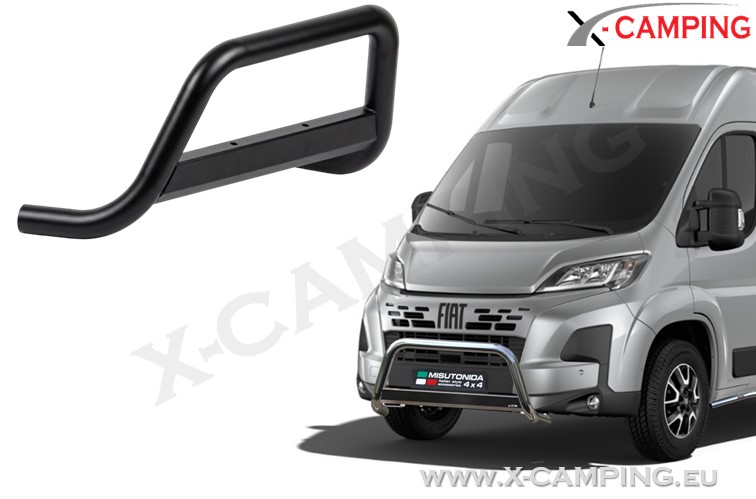
Looks – why this accessory is becoming more and more popular
Anyone travelling with a camper or van these days wants more than just getting from A to B. The vehicle becomes a companion, a home on wheels – and that’s exactly why looks are playing an increasingly important role. Many factory vehicles look rather plain or “bare”, especially around the front and sides. At the same time, these are exactly the areas that are particularly vulnerable in everyday use: small bumps in tight campsites, stone chips on long journeys or confusing manoeuvring situations leave marks faster than you’d like.
At the same time, the vanlife trend is booming. More and more people are opting for individuality, converting their vehicles and valuing a personal look. The camper shouldn’t just be functional – it should also reflect your own style, whether clean and modern or rugged in an off-road design.
That’s exactly where bull bars and side protection bars come in. They combine practical protection with a striking appearance and turn a standard panel van into a real statement on four wheels.
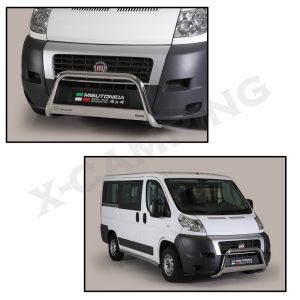
What are bull bars & side protection bars, anyway?
Bull bars and side protection bars are among the most popular accessories when it comes to upgrading vans and motorhomes. Both components are permanently mounted to the vehicle and are tailored to specific models – so they enhance not only the look, but also the function.
Bull bar
A bull bar is fitted to the front of the vehicle. It runs in front of the bumper and grille area and is primarily designed to protect the front end. At the same time, it creates a much more distinctive look – depending on the version, either subtle or in a rugged off-road style.
Side protection bars
Side protection bars, on the other hand, are mounted along the sides of the vehicle below the doors. They protect the bodywork from side contact, for example in tight parking spaces or on narrow tracks. They can also serve as a practical step, especially on lifted campers or vans.
In short:
- Bull bar = protection and a visual upgrade for the vehicle front
- Side protection bars = protection for the sides plus extra comfort when getting in
Both elements can be ideally combined, creating a cohesive overall look and improving everyday usability.
Everyday benefits – more than just looks
Even if bull bars and side protection bars may look like pure styling accessories at first glance, they really show their strengths in daily use. Especially for campers and vans that are frequently on the road, the practical benefits quickly become noticeable.
Protection when manoeuvring
A major plus is the extra protection when manoeuvring. Tight pitches, narrow access roads or confusing situations are part of everyday camping. Bull bars can absorb minor bumps to the front of the vehicle, while side protection bars shield sensitive side areas from contact with bollards, walls or other vehicles.
Protection from side impacts
They also offer benefits on longer trips. Stone chips and kicked-up dirt, for example on motorways or gravel roads, often hit the front end first. A sturdy bull bar can help reduce stress on particularly vulnerable areas.
Step assistance
Side protection bars also score with their practical use as a step. Especially on taller vans or converted campers, they make getting in and out easier – particularly in everyday use or when travelling with lots of luggage.
Auxiliary lights or LED bars
Another advantage: many bull bars allow you to mount auxiliary lights or LED bars. This can be a real added value, especially when driving in remote areas or in poor lighting conditions.
Bottom line: bull bars and side protection bars are far more than just visual upgrades – they improve everyday usability and make travelling with a camper that bit more relaxed.
Which vehicles are they worth it for?
Bull bars and side protection bars are now available for a wide range of vans, transporters and motorhome base vehicles. They’re particularly useful for models that are often converted into campers or used daily.
Some of the most popular vehicles include:
- Fiat Ducato
- Citroën Jumper
- Peugeot Boxer
- Mercedes-Benz Sprinter
- Ford Transit
- Renault Master
These models form the basis for a large share of campervans, panel vans and motorhomes in Europe. Accordingly, there’s also a wide selection of perfectly fitting accessory solutions.
Important: the model year plays a crucial role. Many bull bars and side protection bars are precisely matched to specific generations – for example on the Fiat Ducato (e.g. from 2014 or from 2024) or the Ford Transit (e.g. 2014–2020 or facelift from 2020).
That’s why: when buying, always pay close attention to the model, model year and, if applicable, the facelift version to ensure a perfect fit and hassle-free installation.
Precisely because these vehicles are so widespread, retrofitting is especially worthwhile – for both visual and practical reasons.
Design & versions – which look suits your van?
Besides function, one thing matters most when buying: looks. Bull bars and side protection bars noticeably change a vehicle’s character – from elegant to a rugged off-road look.
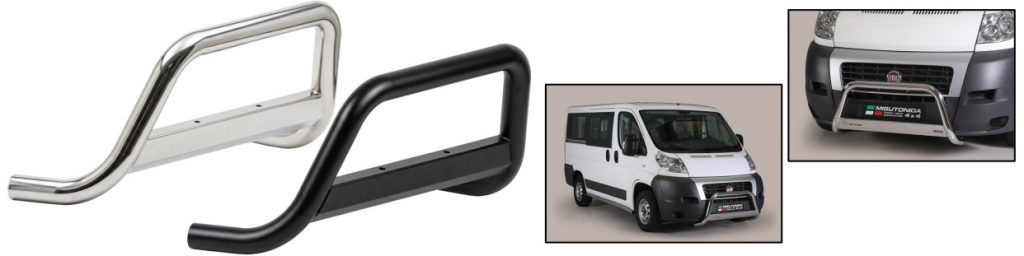
The classic option is high-gloss polished stainless steel. This version looks particularly premium and suits motorhomes or vans with a clean, factory-style design. At the same time, stainless steel impresses with durability and corrosion resistance.
If you prefer something more modern and sporty, go for matte black powder-coated models. This option emphasises the off-road character and is often used on campervans or converted transporters. The matte surface is also less sensitive to dirt and signs of wear.
The design also matters. Models with a crossbar look more striking and technical, while versions without a crossbar appear more minimalist and subtle. Both serve the same purpose – the decision mainly comes down to personal taste.
A particularly cohesive overall look is created when bull bars and side protection bars are combined. This makes the vehicle look like a single, integrated design with clear, continuous lines.
Quality makes the difference – what to look for
There are big differences in bull bars and side protection bars – especially in terms of material, workmanship and fit. At first glance, many products may look similar, but in everyday use it quickly becomes clear how important quality really is.
A key factor is the material. High-quality systems are made from stainless steel (Inox), which is not only particularly strong, but also extremely durable and corrosion-resistant. Especially for vehicles used year-round, this is a clear advantage over simple steel or lower-quality coated versions.
A good example of such quality solutions is the Italian manufacturer Misutonida. The company has been developing vehicle accessories directly on each model for over 25 years, using modern manufacturing techniques and precise fitment.
Another important point is vehicle-specific development. High-quality bull bars are precisely matched to specific models and model years. This not only ensures a perfect look, but also easy installation without modifications or compromises.
The surface finish also matters. Whether polished stainless steel or matte black powder coating – durable finishes protect the material long-term from the elements and ensure the accessory still looks premium even after years.
By comparison, cheap universal solutions often can’t keep up. They fit less precisely, look less integrated and show signs of wear more quickly.
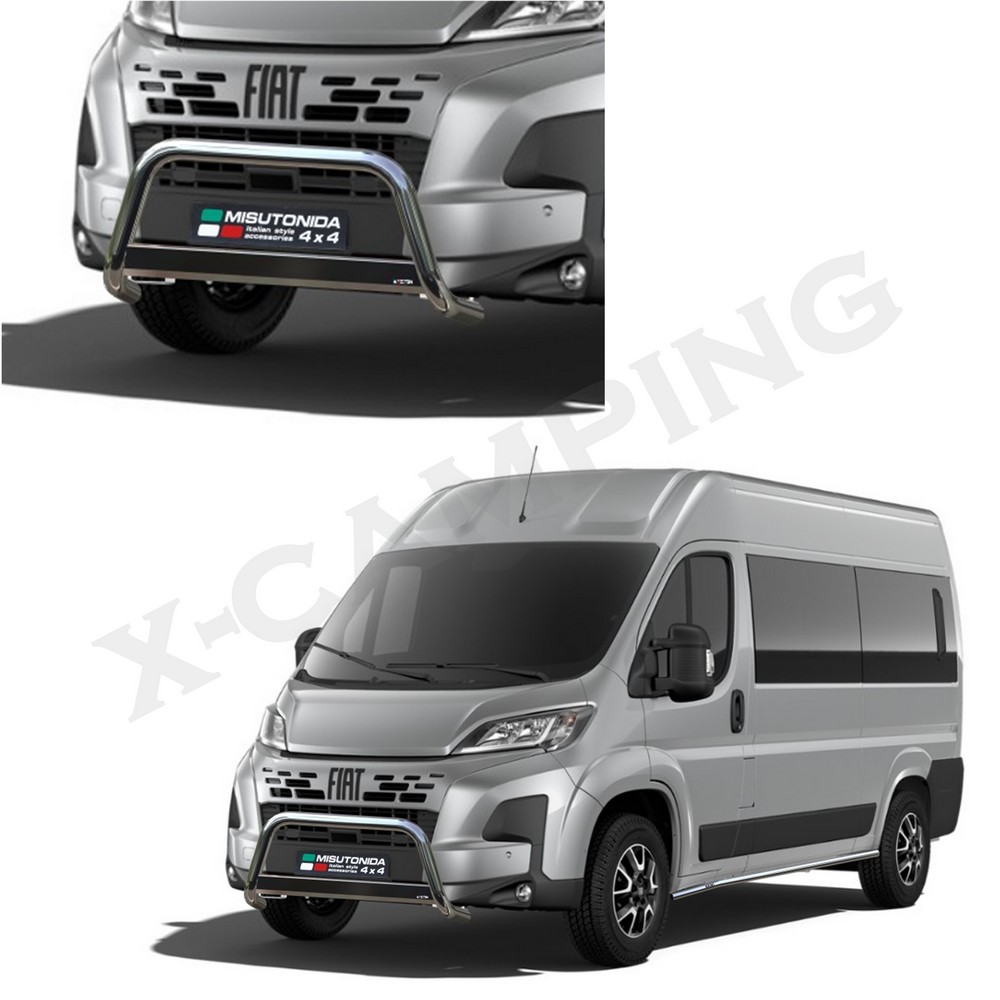
Legal requirements & approval in the EU
When it comes to bull bars and side protection bars, approval is important – especially if the vehicle is used on public roads. The good news: modern systems are generally permitted today, provided they meet certain requirements.
What matters is the ECE type approval under EC/78/2009. This regulation ensures that front protection systems meet European requirements and, in particular, take pedestrian protection into account. Older, heavy “bullbars” without the relevant testing are no longer permitted – modern versions, however, are designed to provide protection while still being safe for road use.
In practice, this means:
In most cases, no additional registration is required as long as the bull bar has valid ECE approval and is installed correctly.
However, it’s important to use only tested and approved products. This is the only way to ensure all legal requirements are met and to avoid issues during inspections or in the event of a claim.
Compatibility with driver assistance systems
One of the most common questions about bull bars is compatibility with modern driver assistance systems. After all, many current vans and motorhomes are equipped with sensitive technology that provides safety and comfort.
With high-quality, vehicle-specific systems, this is taken into account. The design ensures that key sensor areas remain clear and are not affected. This means essential assistance systems continue to work reliably, including:
- ACC (adaptive cruise control)
- Parking sensors (PDC)
- Emergency braking and collision assist systems
On vehicles with a front camera, depending on the model, a small area may be within the field of view – in practice, however, this usually has no noticeable impact on function.
What matters most here is the product’s quality and precise fit. Manufacturers like Misutonida develop their systems directly on the vehicle and match them precisely to the respective technology.
Buying guide & why X-CAMPING is the right choice
How to choose the right bull bar
Several factors play a key role when choosing:
- Vehicle model & model year
Bull bars are developed specifically for each vehicle. The model, model year and, if applicable, the facelift version are crucial to ensure an optimal fit. - Finish & design
Stainless steel looks classic and premium, while matte black powder-coated versions emphasise a modern, sporty character. - Intended use
For mainly urban use, subtle versions are sufficient. For off-road-oriented vehicles, more striking versions offer additional presence and function. - Design variant
Models with a crossbar look more technical and rugged, while versions without a crossbar offer a clean, reduced look.
The more precisely a bull bar is matched to the specific vehicle, the better the integration, function and installation.
Why X-CAMPING is the right choice
Besides the product selection, the supplier also matters. X-CAMPING stands for tested quality and reliable distribution in the European market.
- official distributor of XIMPLIO
- only original Misutonida products
- tested EU approval including complete homologation documentation
- expert advice and technical support
Result: high product quality, perfectly fitting solutions and maximum safety in selection and use.
Conclusion & product selection at X-CAMPING
Bull bars and side protection bars are far more than just styling elements. They provide extra everyday protection, improve functionality and give vans and motorhomes a much more distinctive look. Their practical benefits quickly become clear, especially on frequently used vehicles, in the vanlife scene or when travelling off paved roads.
Thanks to modern materials, vehicle-specific development and tested approvals, these accessory solutions are now technically mature and easy to use day to day. High-quality systems – for example from Misutonida – combine durability, safety and perfectly matched design.
For vehicles such as the Fiat Ducato, Mercedes-Benz Sprinter or Ford Transit, this accessory is a worthwhile addition – both visually and functionally.
Suitable bull bars and side protection bars for various vehicle models are available in the X-CAMPING range – with tested quality, vehicle-specific fit and full EU approval.
Frequently asked questions about bull bars & side protection bars (FAQ)
Are bull bars allowed?
Modern bull bars with ECE type approval under EC/78/2009 are approved for road use in the EU. The requirements are correct installation and the use of tested, approved systems.
Do bull bars affect driver assistance systems?
With high-quality, vehicle-specific models, assistance systems such as ACC (adaptive cruise control), parking sensors or emergency braking assist generally remain fully functional.
Which bull bar fits my Fiat Ducato?
The key factors are the model year and generation (e.g. from 2014 or facelift from 2024). Bull bars are precisely matched to specific versions and should be selected accordingly.
Are side protection bars useful?
Side protection bars protect the vehicle sides in tight manoeuvring situations and can also serve as a step. Especially on larger vans and motorhomes, they offer real practical value.
Does a bull bar need to be registered?
In most cases, no registration is required, provided there is valid ECE approval and the system has been installed correctly.
How complex is the installation?
Modern bull bars are vehicle-specific and are mounted to existing mounting points. As a rule, no drilling is required, and installation can be completed in a short time.
Stainless steel or matte black – which option is better?
Technically, there are usually no differences. Stainless steel looks classic and durable, while matte black offers a modern, rugged look. The choice mainly depends on the look you want.
Are bull bars also available for newer models?
Yes, for current vehicle models such as new generations of the Ford Transit or Mercedes-Benz Sprinter, there are suitable, further developed systems with modern approval.
Does a bull bar affect fuel consumption?
In normal driving, the impact is minimal. Thanks to the aerodynamic shape of modern bull bars, there are hardly any noticeable differences in practice.
Can a bull bar be removed later?
Yes. Since installation is usually done without permanent changes to the vehicle, a bull bar can be removed again without leaving any traces if needed.
Are there differences in quality?
Yes, especially in material, workmanship and fit. High-quality systems – such as those from Misutonida – offer durable stainless steel construction and precise, vehicle-specific solutions.


